We arrived in Buenos Aires on Wednesday for a 5 night stay. Quite a contrast after the peace and isolation of the Peninsula Valdes, but we like to ring the changes. We thought we’d be fed up with hotels by this stage and had booked an apartment. Modern and non-descript but perfectly comfortable. There is a small supermarket more or less next door, but unfortunately it’s not terribly well stocked and we couldn’t taste any cheese at all in the 4-cheese ravioli we bought for supper and the passata that we bought to go with it turned out to be more like tomato soup. Never mind….we will try somewhere else next time we decide to eat in!
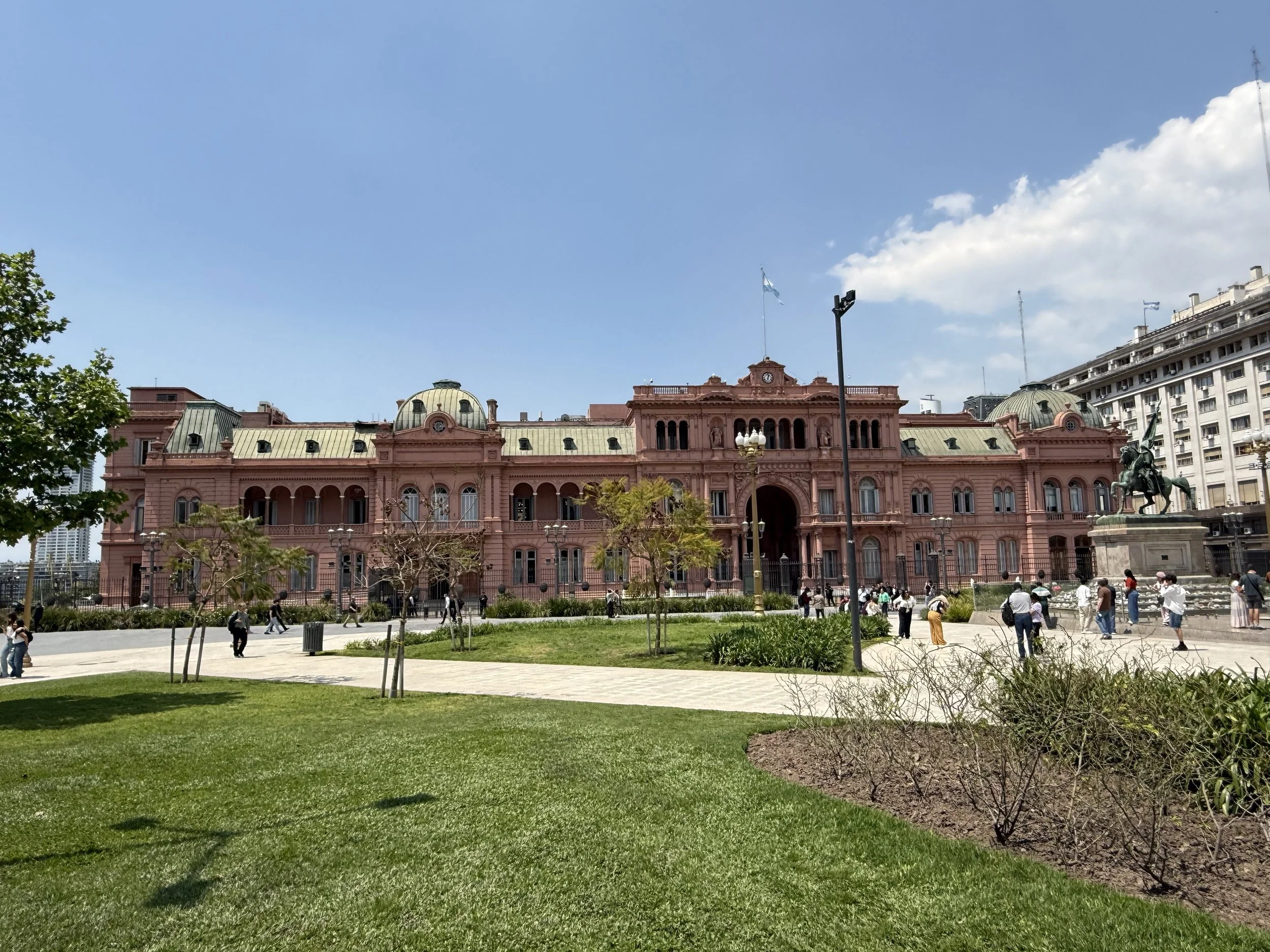
On our first day here we took the Subte (metro) to the historic centre and started our exploration in the main square, the Plaza de Mayo. Here we saw the Casa Rosada (the presidential palace) including the famous balcony from which Evita Peron sang Don’t Cry for Me Argentina - or something like that….
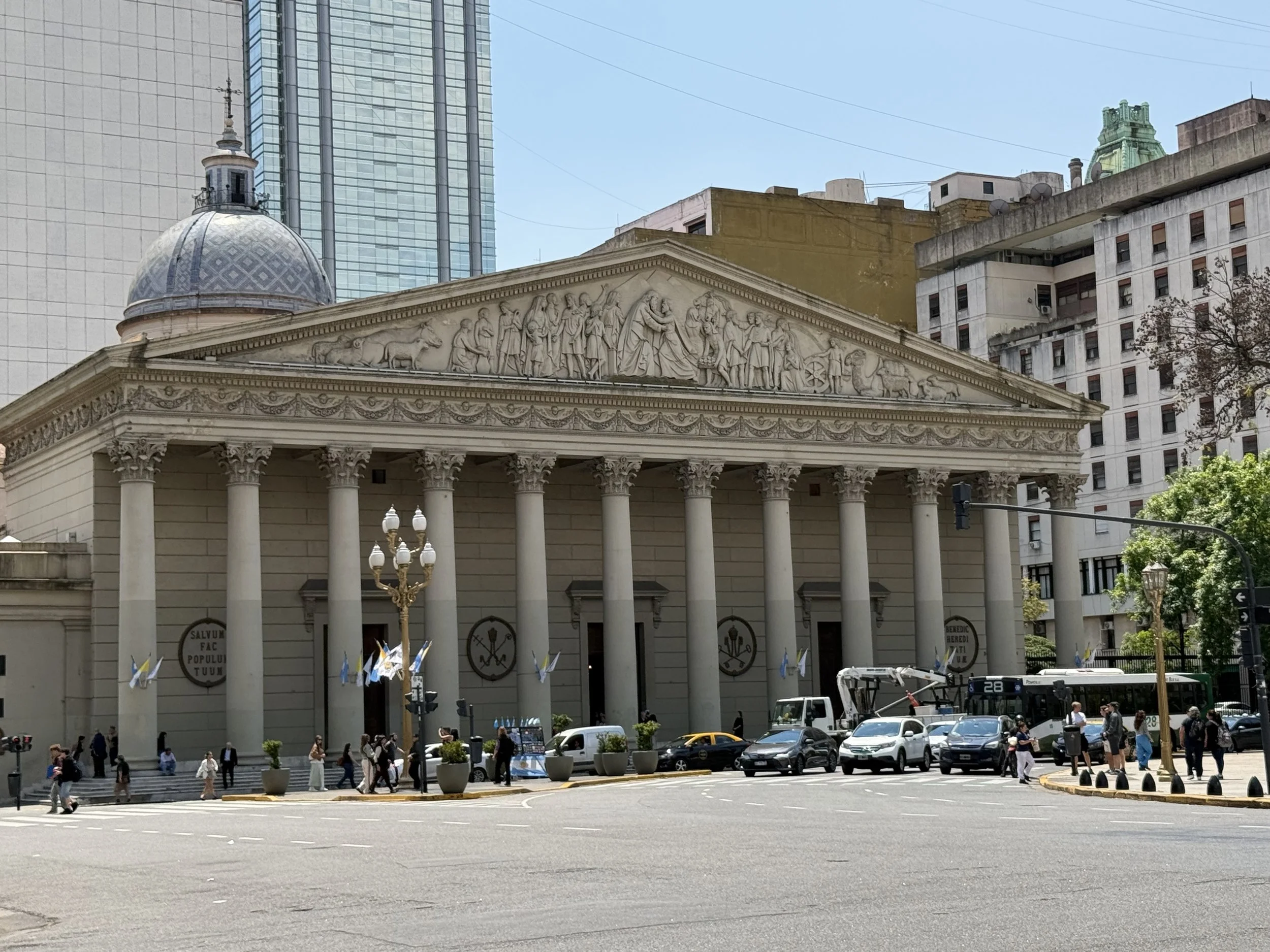
The cathedral is the second main building on the square, looking more like a Greek or Roman temple. We liked the interior - Baroque, but not too baroque. It houses the tomb of the famous revolutionary, Jose de San Martin. The people here are full of anticipation for the imminent visit of Pope Leo. Fortunately we are leaving before he arrives as the city will be packed. The previous Pope, Francis, was formerly Archbishop of Buenos Aires and would have regularly celebrated mass in this cathedral.
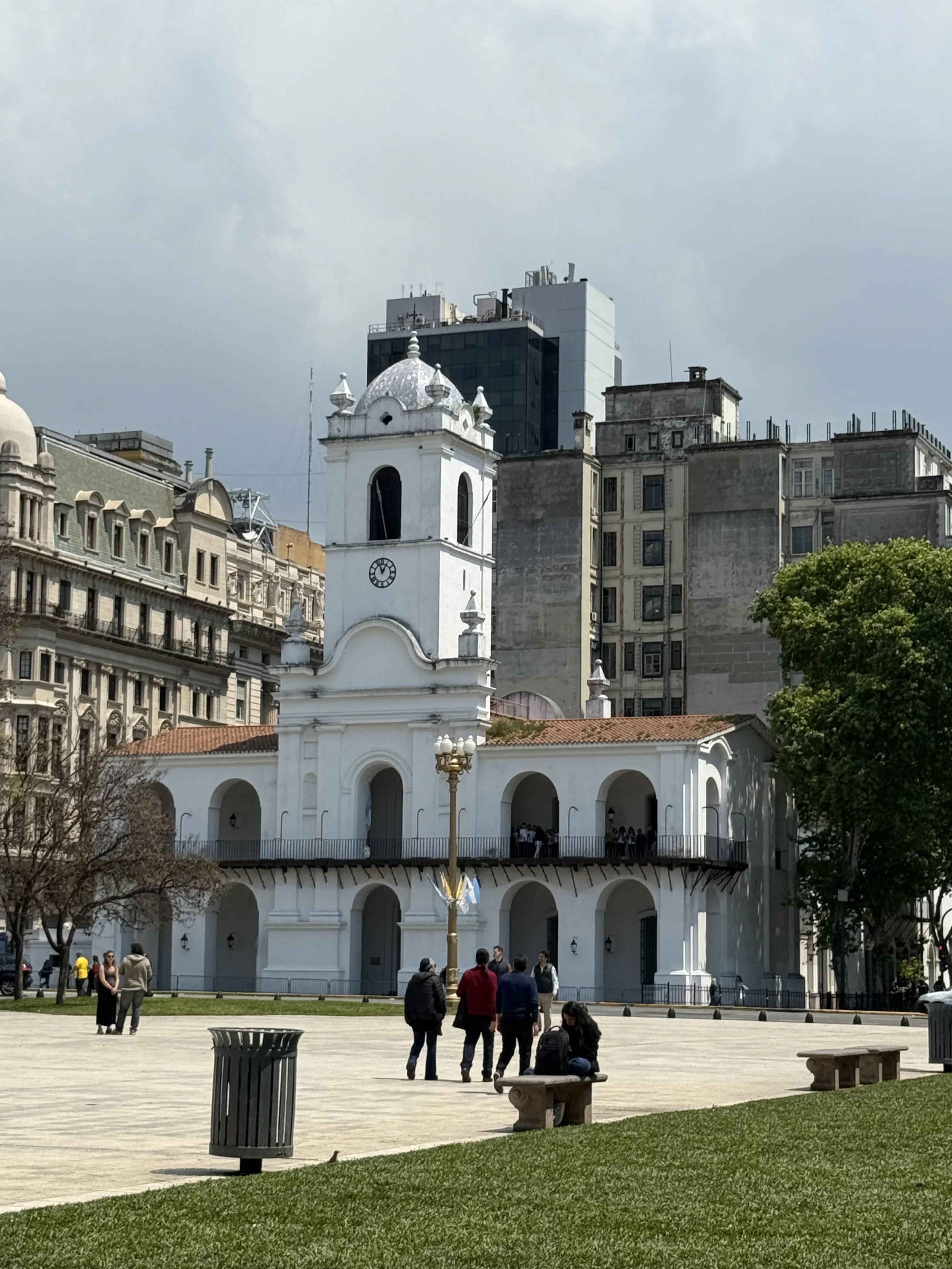
The final building we visited is the Cabildo, the original town hall from Spanish colonial times. It houses a small museum about the struggle for independence in South America. We also discovered that the British took the city briefly in 1806, and assaulted it again in 1807.
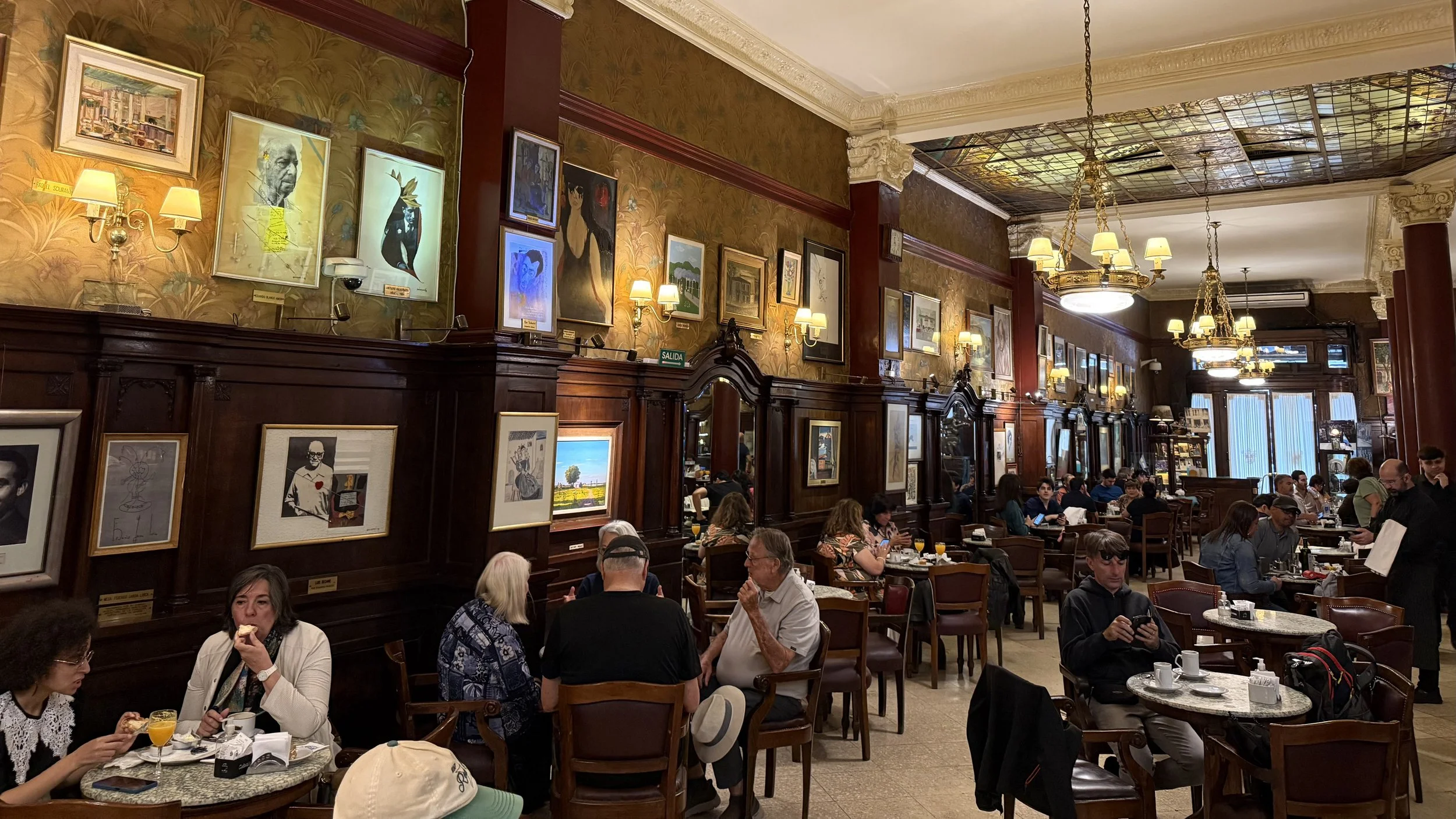
From the main square we walked up to the Cafe Tortoni, established in 1858. Quite a lot of tourists and not many locals, but still very much worth a visit - lots of original features and an interesting collection of artworks.
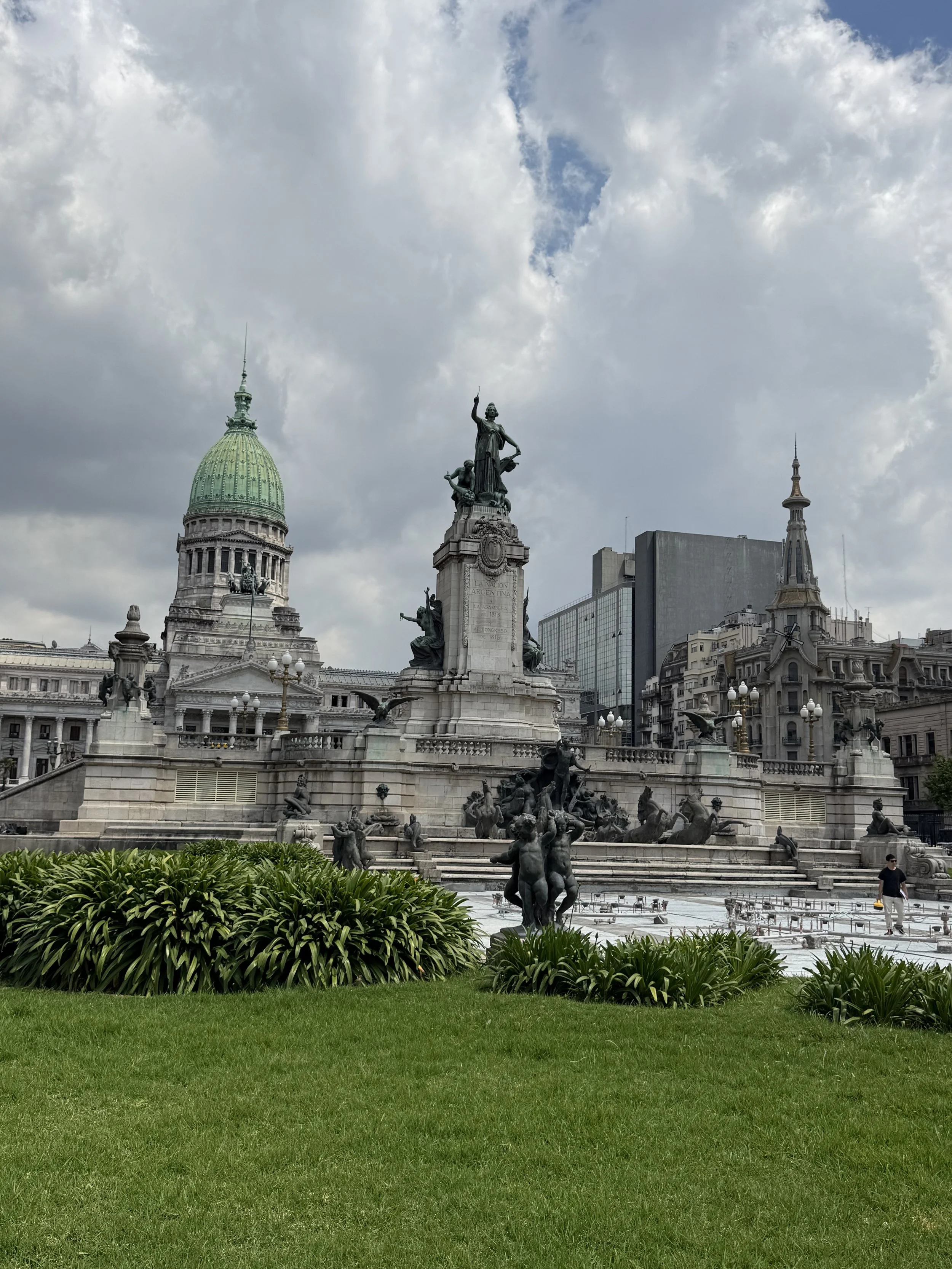
After a cup of coffee, we continued up the same street, which leads from the Plaza de Mayo to the Palacio Congreso de La Nación Argentina. We had to cross one of the city’s main boulevards en route - 10 lanes of traffic in each direction!
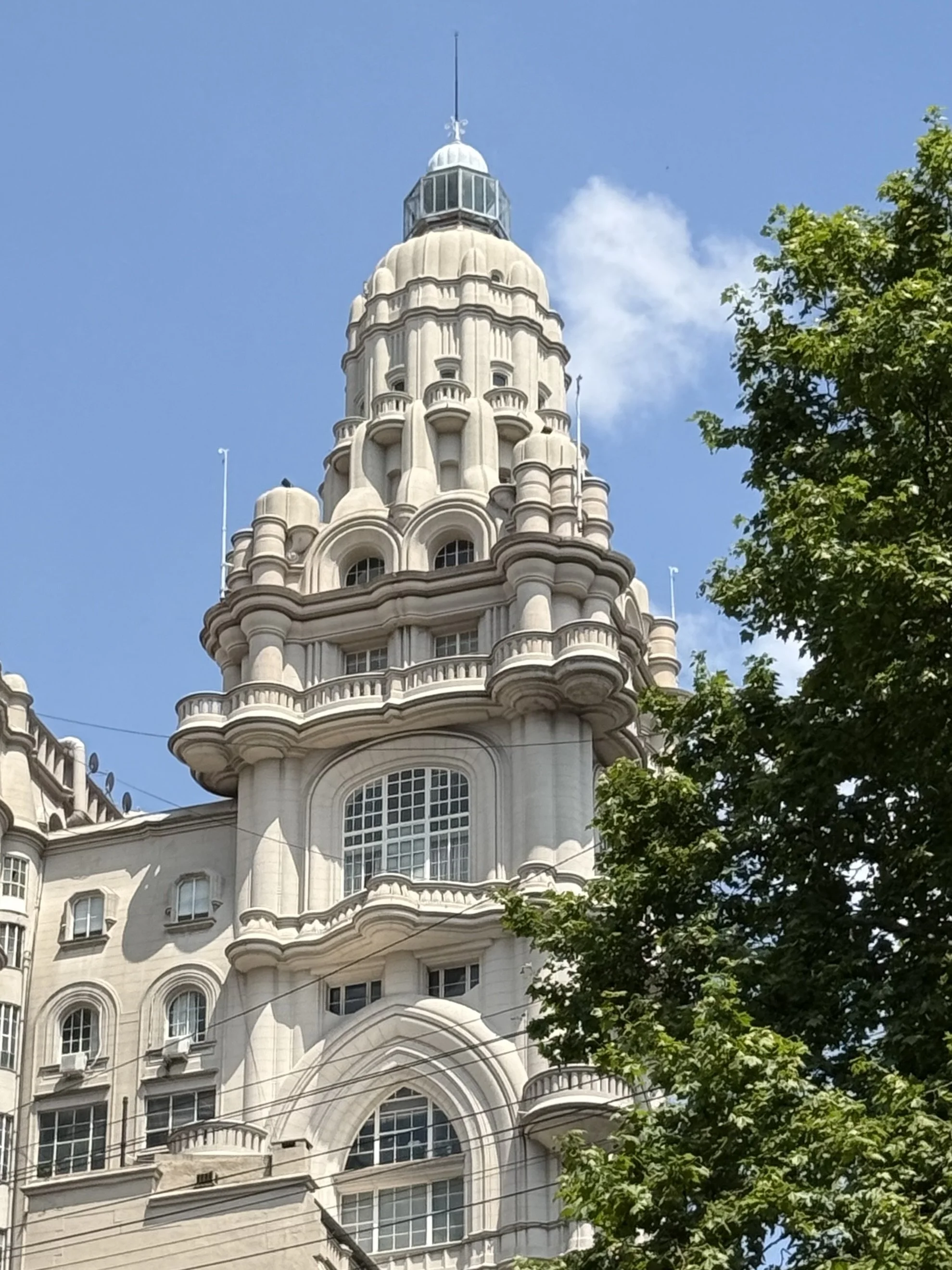
After more walking, a lunch stop and then a tour of the Palacio Barolo. This extraordinary edifice was built as offices between 1919 and 1923 by Italian immigrants, apparently fixated on Dante’s Divine Comedy and the entire building is based on this theme, with lots of symbolism referring to both this and Freemasonry. It was an interesting tour and we reached all the way to the small glass lighthouse at the very top of the building, seen in the picture of the top few floors (22 in total) below.
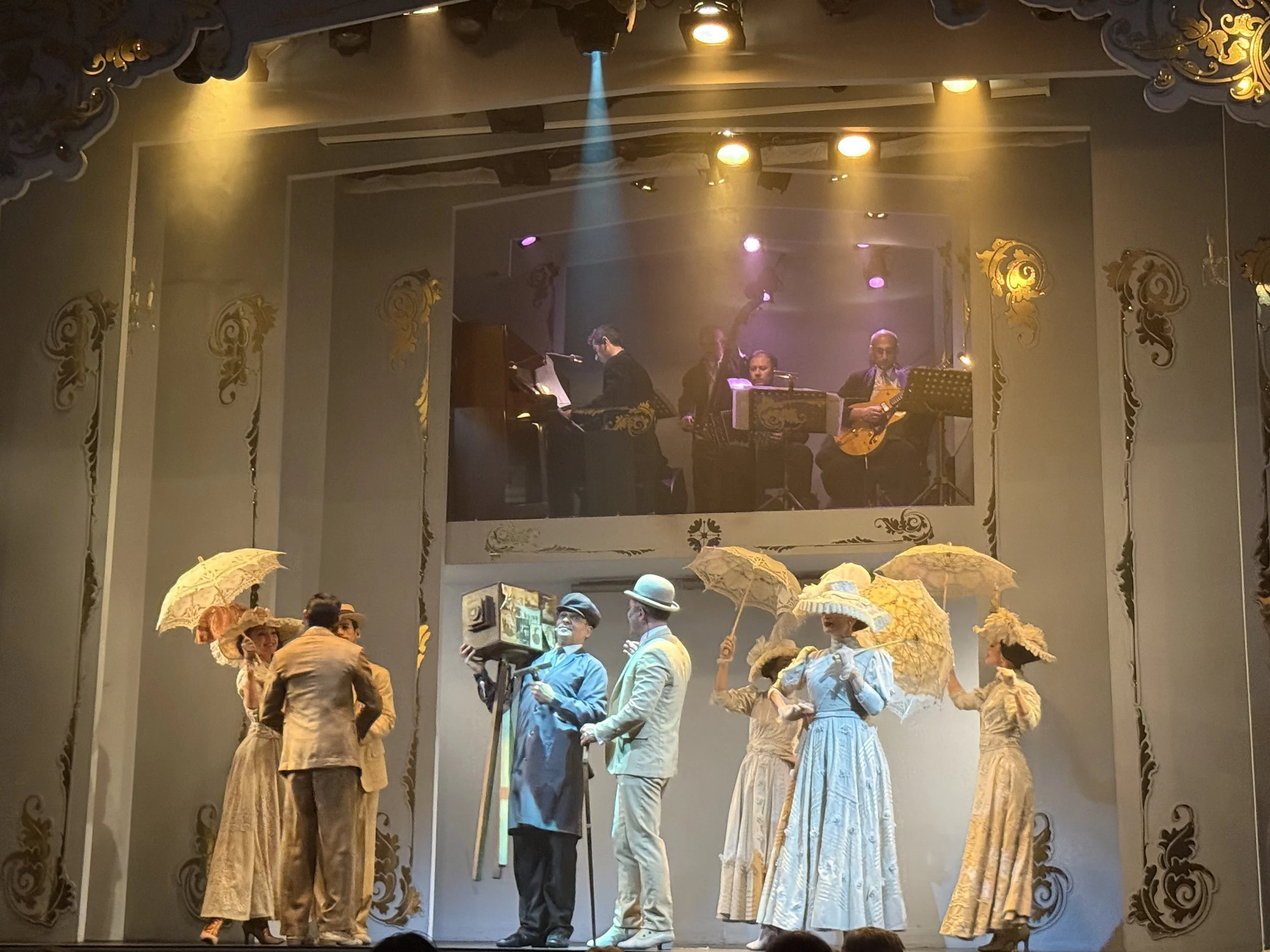
Back to the apartment by Subte to rest before the evening’s entertainment - a tango show, cabaret-style, with dinner included at Cafe de Los Angelitos. We had been in two minds about booking this. Yes, it was a show laid on for tourists, but the music and dancing were of a high quality and the dinner was excellent. We had a very enjoyable evening.
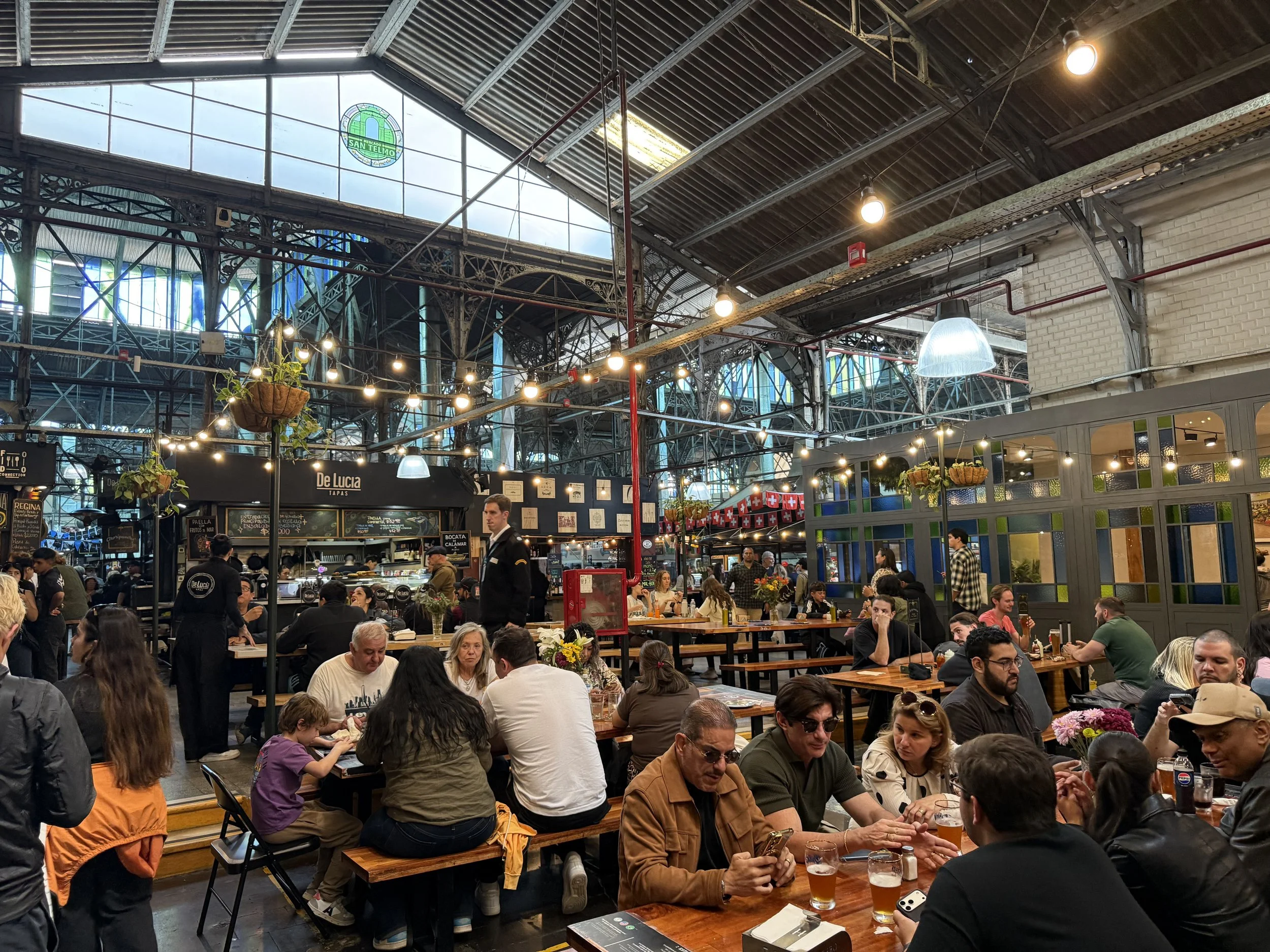
On our second day, we started by visiting the Museo Evita. We were woefully ignorant about the Perons - less so now. From there by Subte to the district of San Telmo, which we enjoyed exploring. It’s an area close to both the docks and the city centre and whilst originally quite a wealthy area by the late nineteenth century it had degenerated into an a district of slum tenements. Now it’s on the up, with a bohemian / artisan feel. We started with a snack lunch in the Mercado de San Telmo, founded in 1897. It’s a bit like Borough Market in London, with lots of different ‘street food’ eateries competing for custom under one roof and a few higher-end restaurants. Lots of life and colour, both in the central market hall and in various nooks and crannies off the Main Street through the area, Defensa.
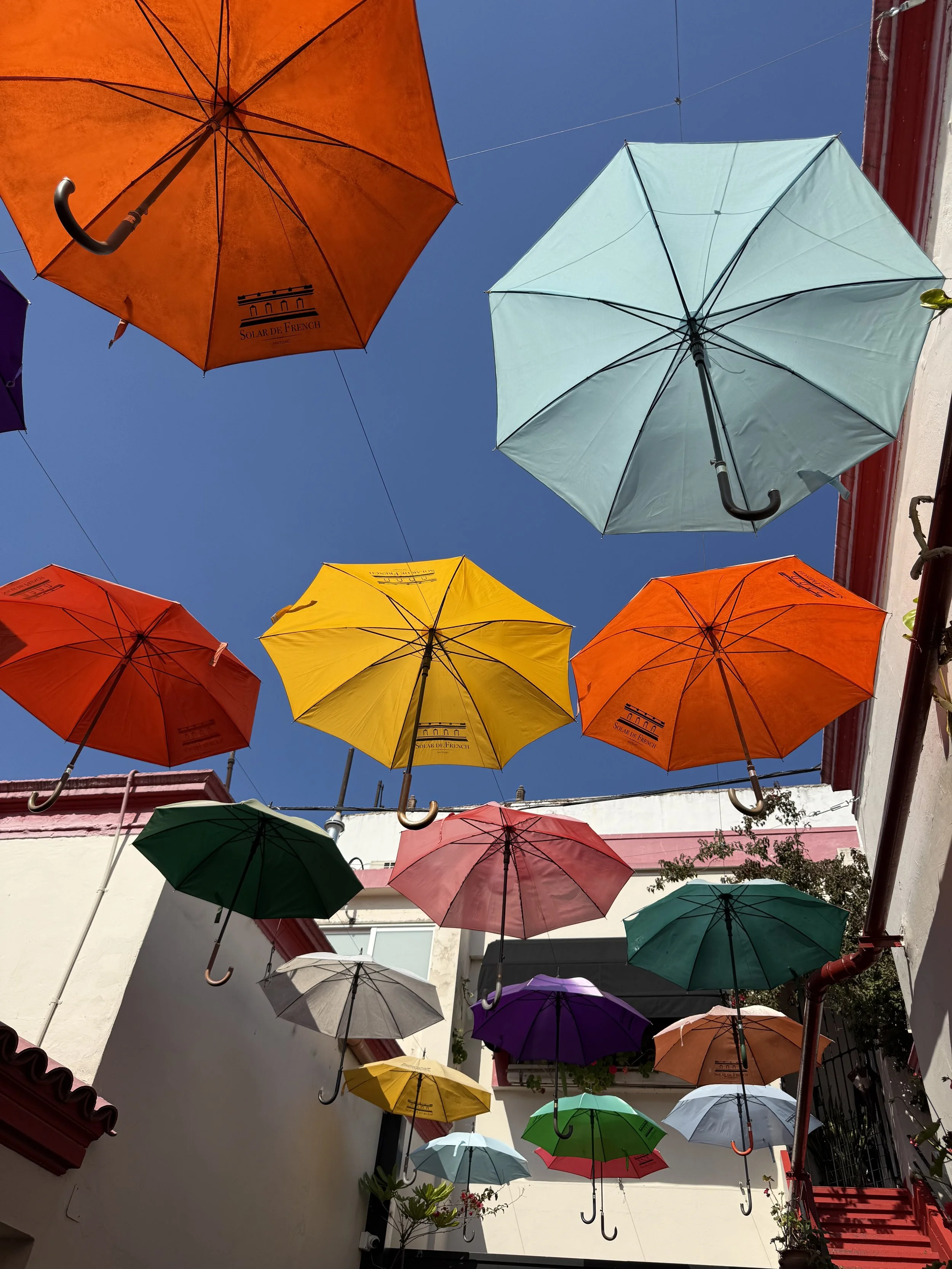
From there to the Museo Historic Naçional, which had good exhibits from the revolutionary period but also continued the coverage of Argentina’s history up to the coup which overthrew the Peron regime in 1955.
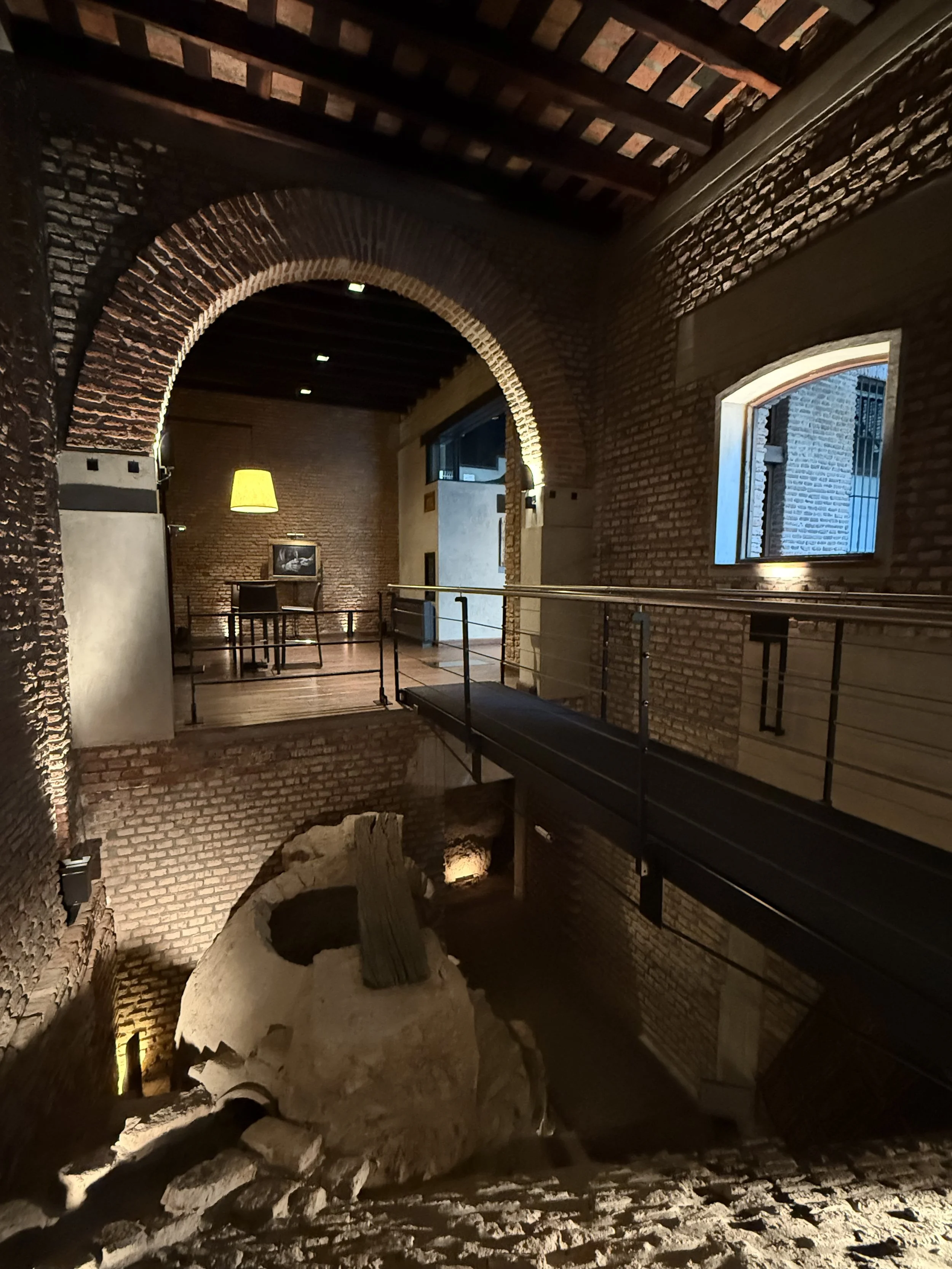
After that, we retraced our steps down Defensa street to El Zanjon de Granados, where we joined a tour of the property in English which lasted for about an hour. Businessman Jorge Eckstein bought the building, which was derelict, for a song in 1985. He was intending to turn it into a restaurant but during the renovations found subterranean tunnels which had acted as conduits for a local stream. Much archaeological work later, the decision was taken to restore and preserve the bones of the house and open it as a museum and event space. This type of house is known here as a casa chorizo - a sausage house, very long and thin. The restoration and excavation, which took 20 years, has been brilliantly done. The tour told us the history of the house, dating from the 1830s, and the process of restoration. No government funding involved. Obviously Jorge Eckstein is a very wealthy man! The picture below is of the old cesspit they discovered.
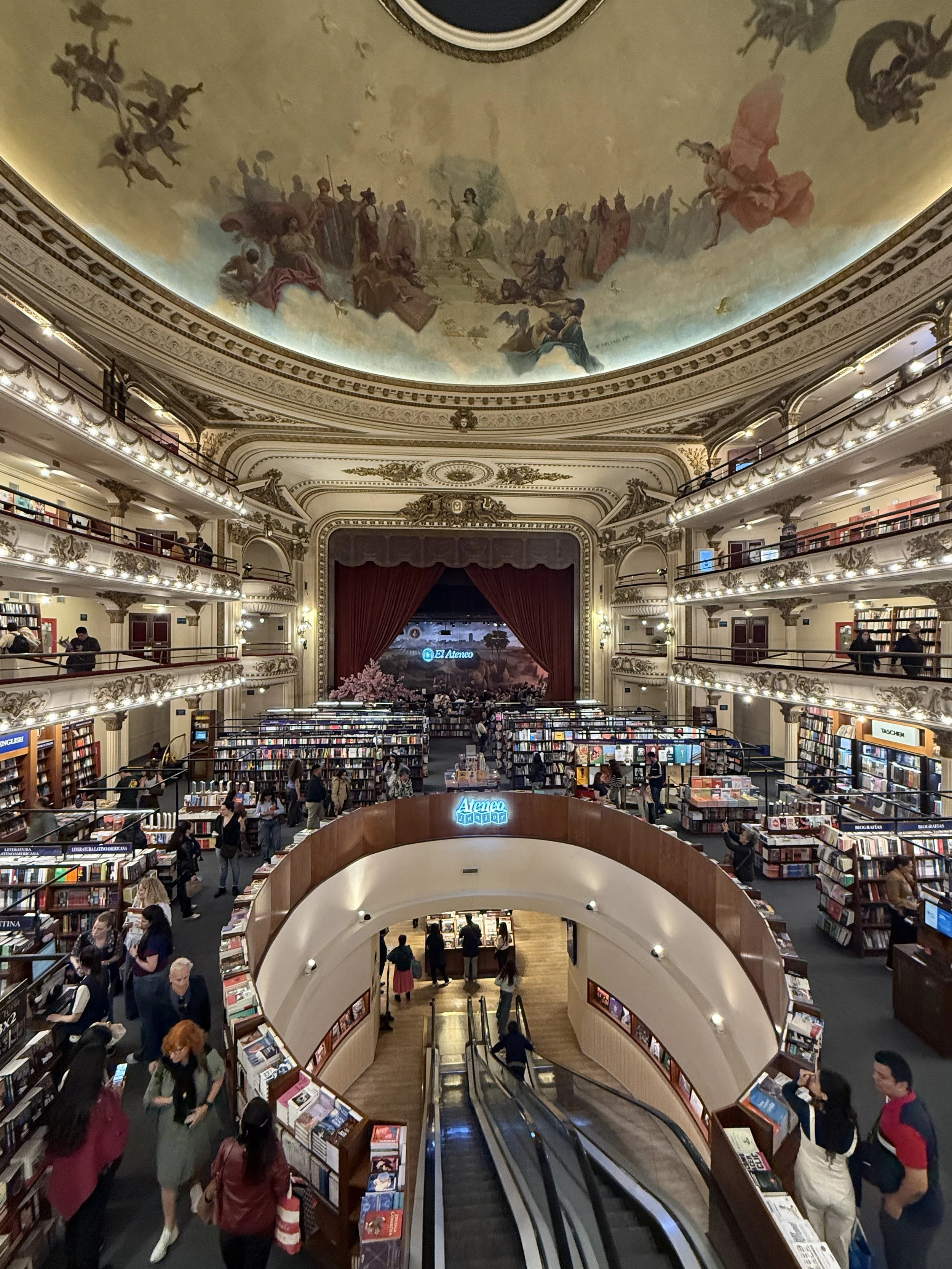
Our last stop on our second day was El Ateneo Grand Splendid. El Ateneo is a chain of bookstores - this one is famous because it’s in an old theatre. It actually works very well as a bookshop, but of course the majority of the books were in Spanish so - for once - we came out empty-handed. Interesting fact - Buenos Aires has more bookshops per capita than any other city in the world!
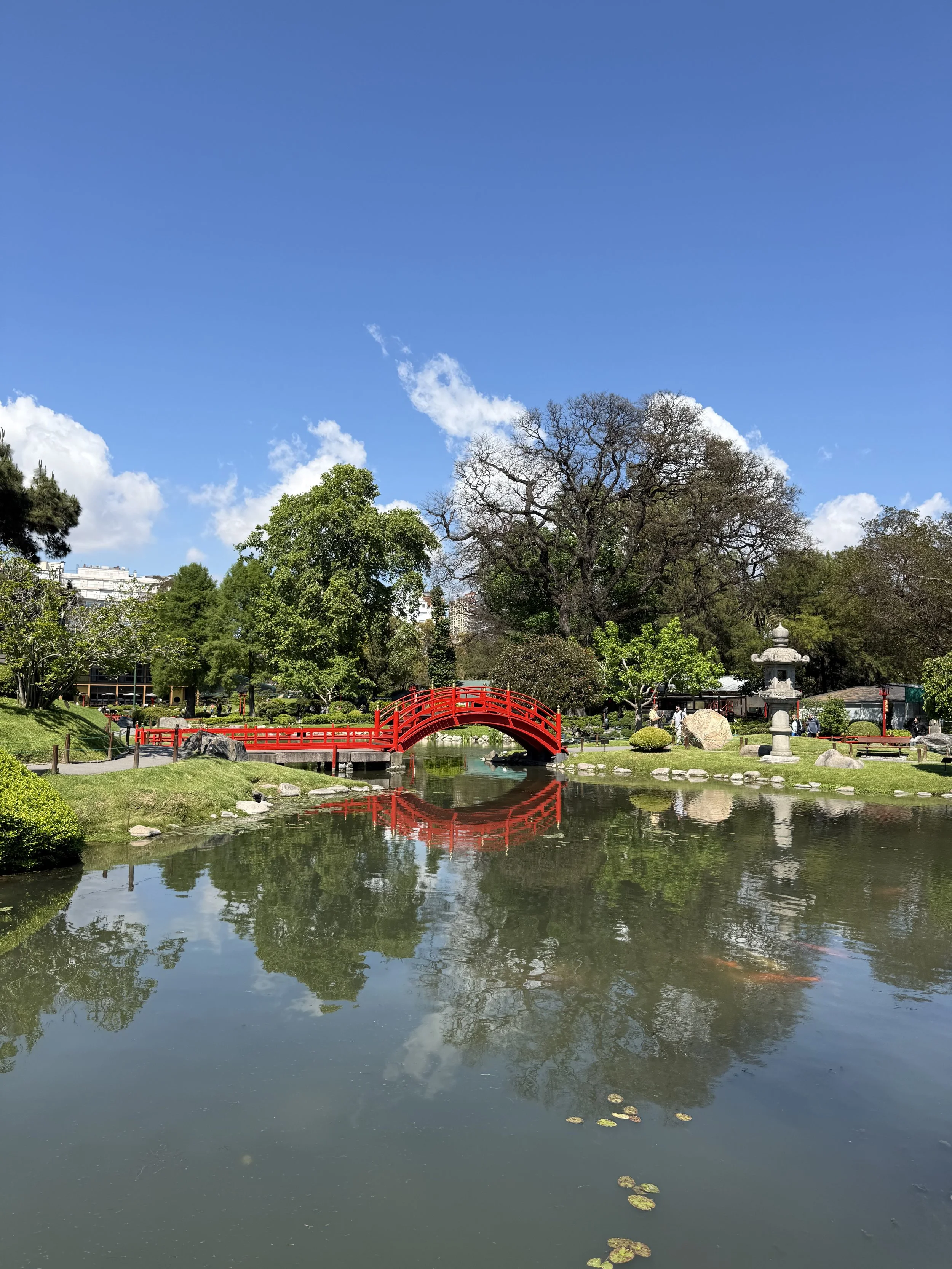
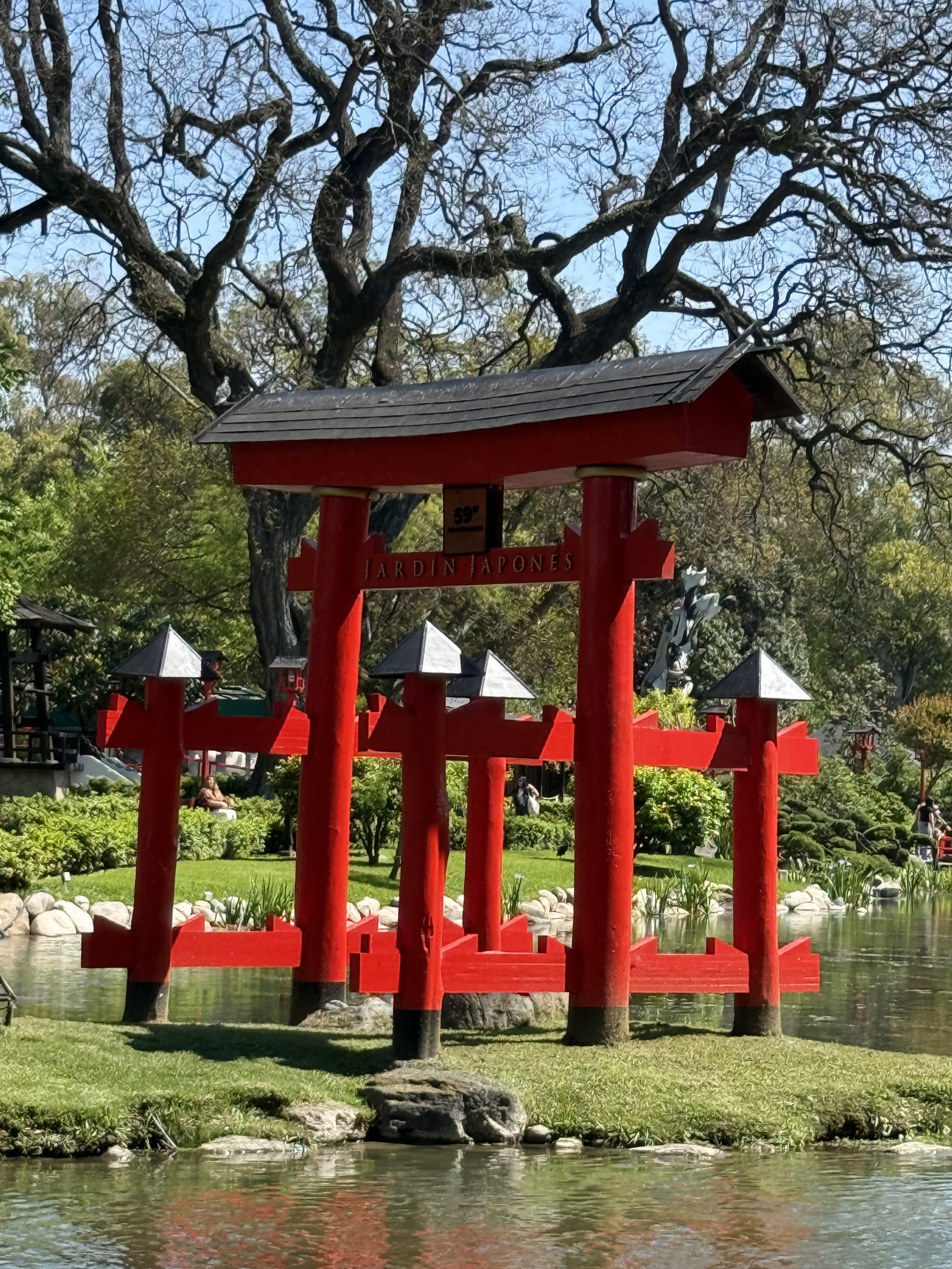
Our third day in Buenos Aires was very sunny and warm and we started by walking to the Jardín Japonese, created in 1967 and one of the largest Japanese gardens in the world, outside of Japan. We got there shortly after it opened, so it wasn’t too busy when we first arrived but got busier later - lots of locals enjoying it, as well as tourists. Lovely to wander the gardens with some early spring colour from azaleas but only one cherry tree so far in bloom. We then stopped at the cafe for tea - a raspberry infusion for Diana and a green tea with burnt rice for me and some fluffy Japanese cake.
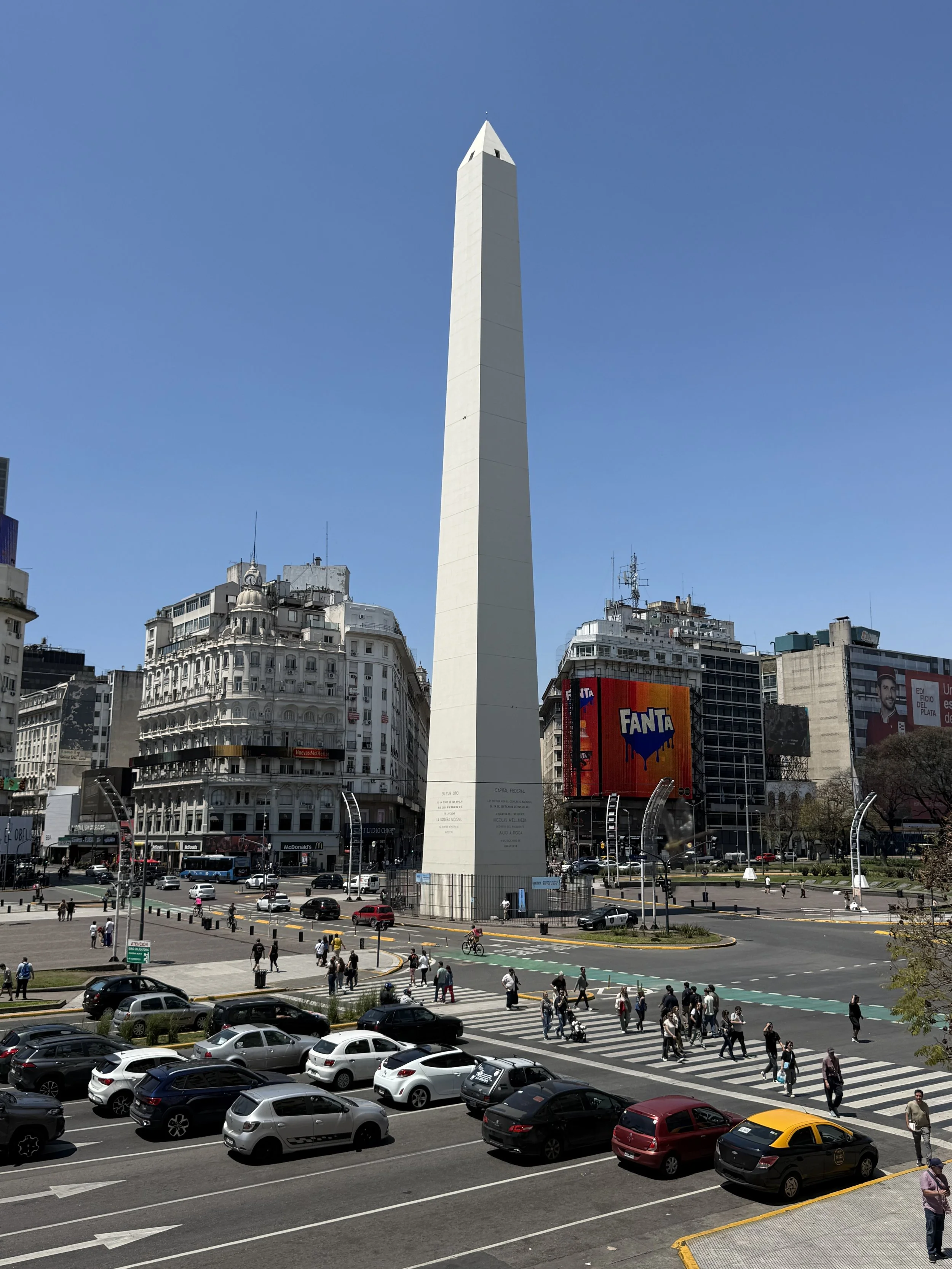
Then to the Obelisco, commemorating the independence declaration of 9 July 1816. It’s in the middle of the grand boulevard which runs North-South through the city centre.
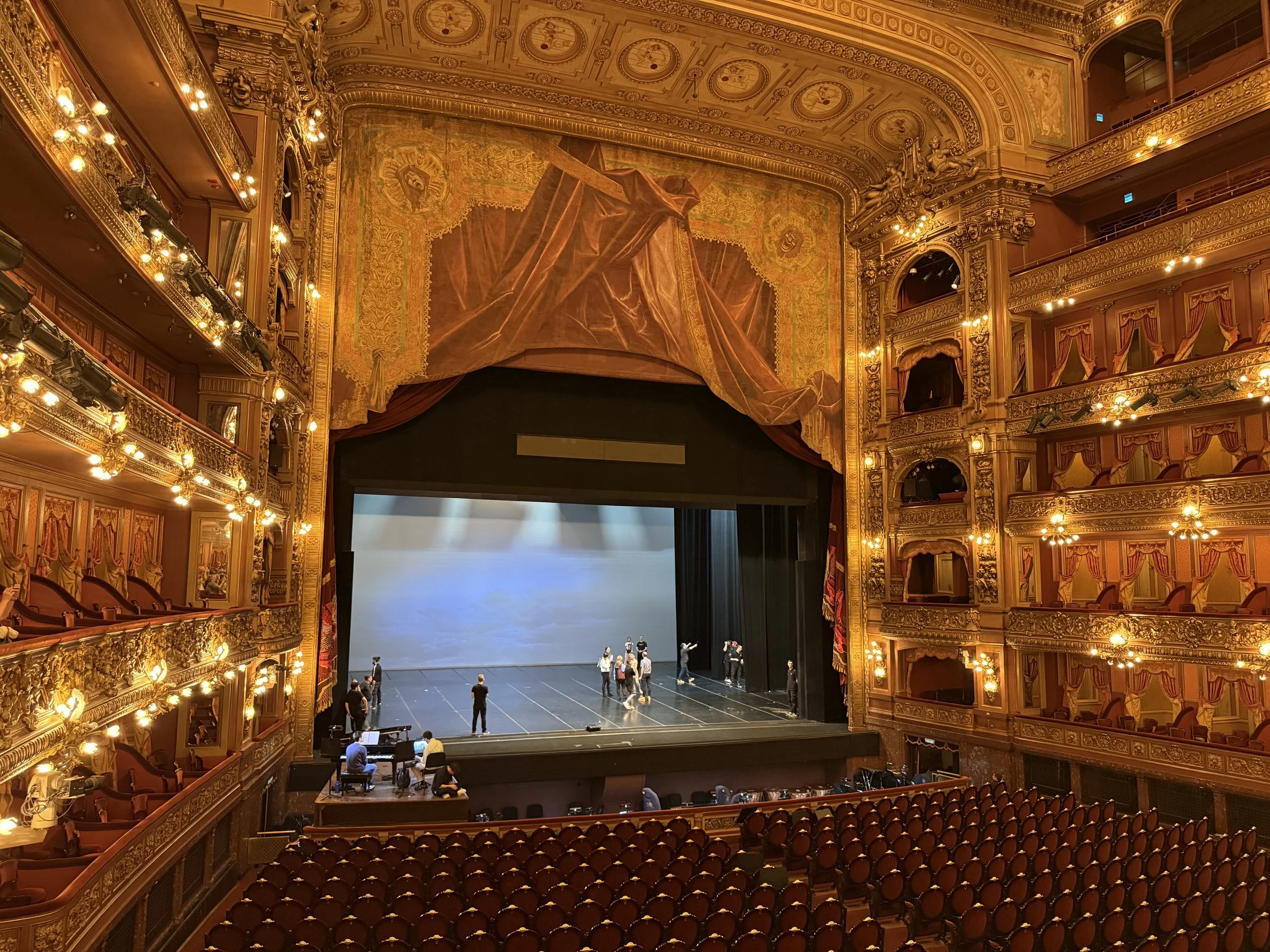
Next a guided tour of the Teatro Colon. The opera house is very grand and very large - seating 2,500 with space for 500 more standing. It’s supposed to have the best acoustics for opera anywhere in the world - Pavarotti thought the acoustic perfect but was troubled by the fact that it meant the audience could hear even the tiniest of mistakes. Like much of Buenos Aires - which in the years of the Belle Epoque they liked to think of as the Paris of South America - it has a very French feel to it. Indeed in the Golden Hall, patrons were only allowed to speak French! There was a ballet rehearsal taking place on stage, but we were allowed access to the auditorium as well as the surrounding halls and lobbies.
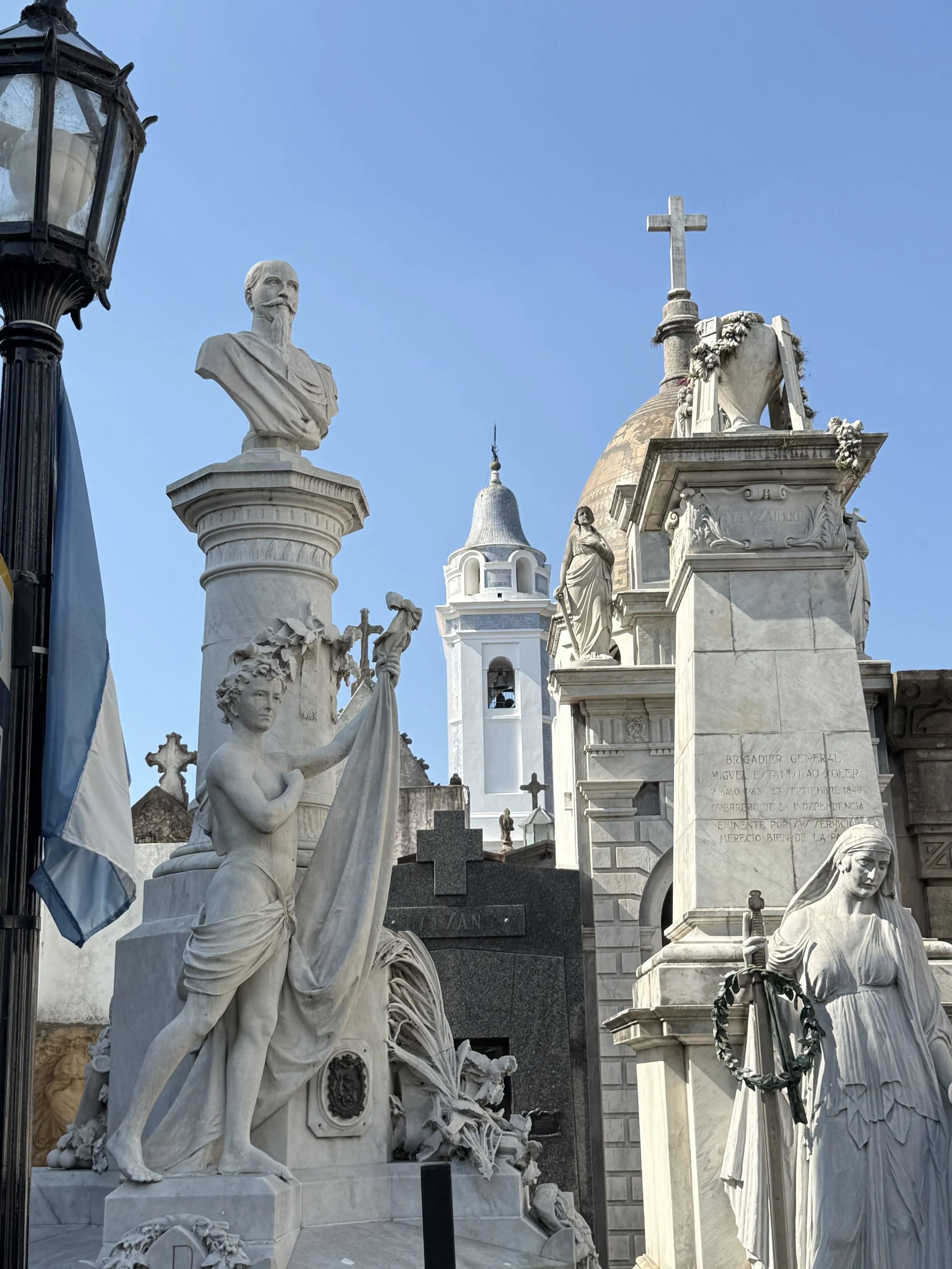
We walked from the Teatro Colon up one of the grandest streets in Buenos Aires - Avenida Alvear - to the Cemetario Recoleta, where the great and the good of Buenos Aires are buried, even today. After a quick pit-stop for an Argentinian cider and an empanada, we joined a walking tour of the cemetery, which lasted nearly 2 hours and took in about a dozen of the main points of interest. It was really helpful, as we would have got much less out of wandering around on our own.
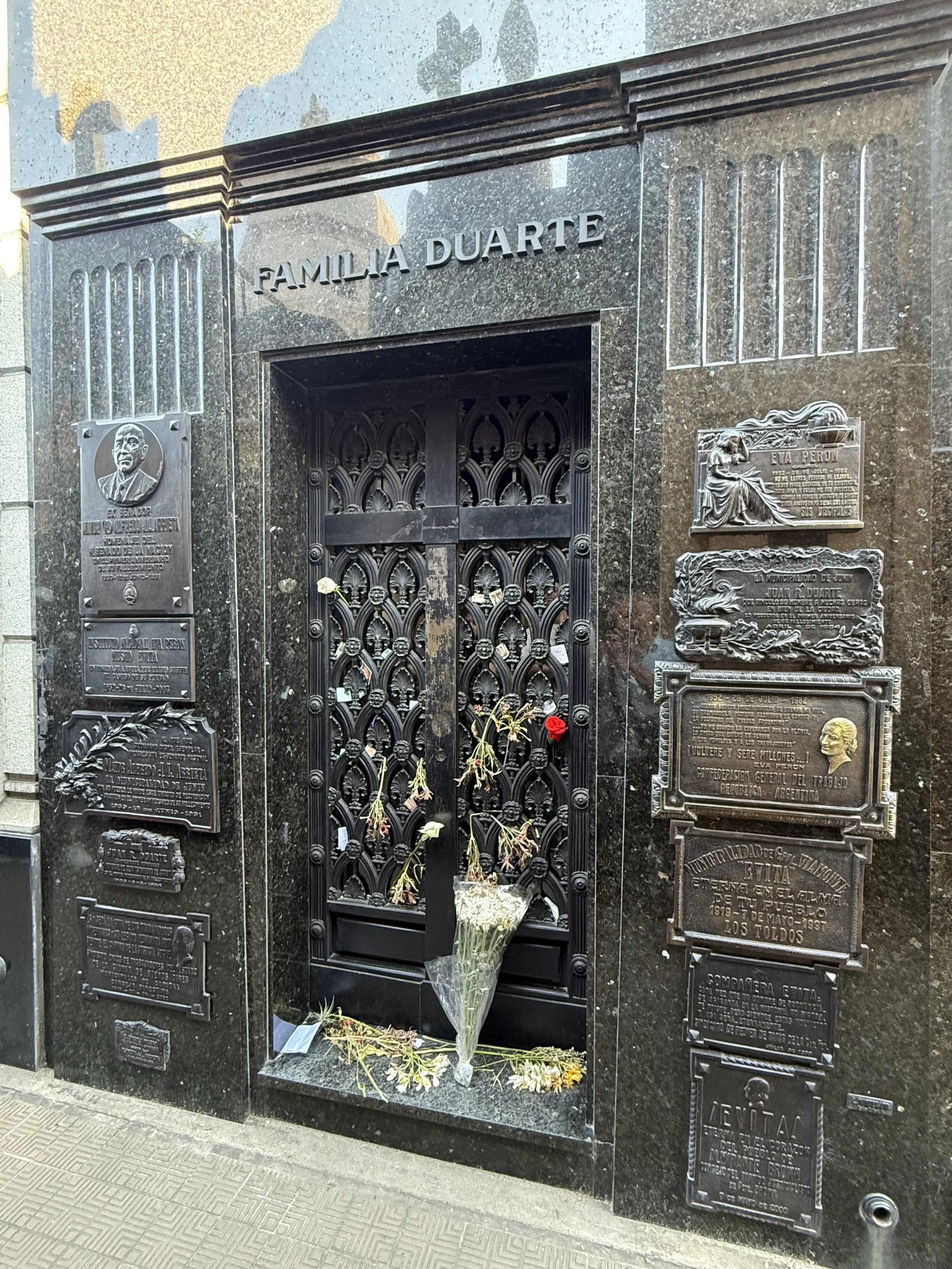
There are over 5,000 mausoleums in the cemetery. They are iceberg-like with two or three floors below ground level where the coffins are placed. The main draw is the mausoleum of the Duarte family where the body of Eva Peron was placed in the 1970s, roughly 20 years after her death. The military junta that took over from Peron had sent her body off to Milan for burial in an unmarked grave, so there would be no shrine created on home soil as a focus for domestic discontent.
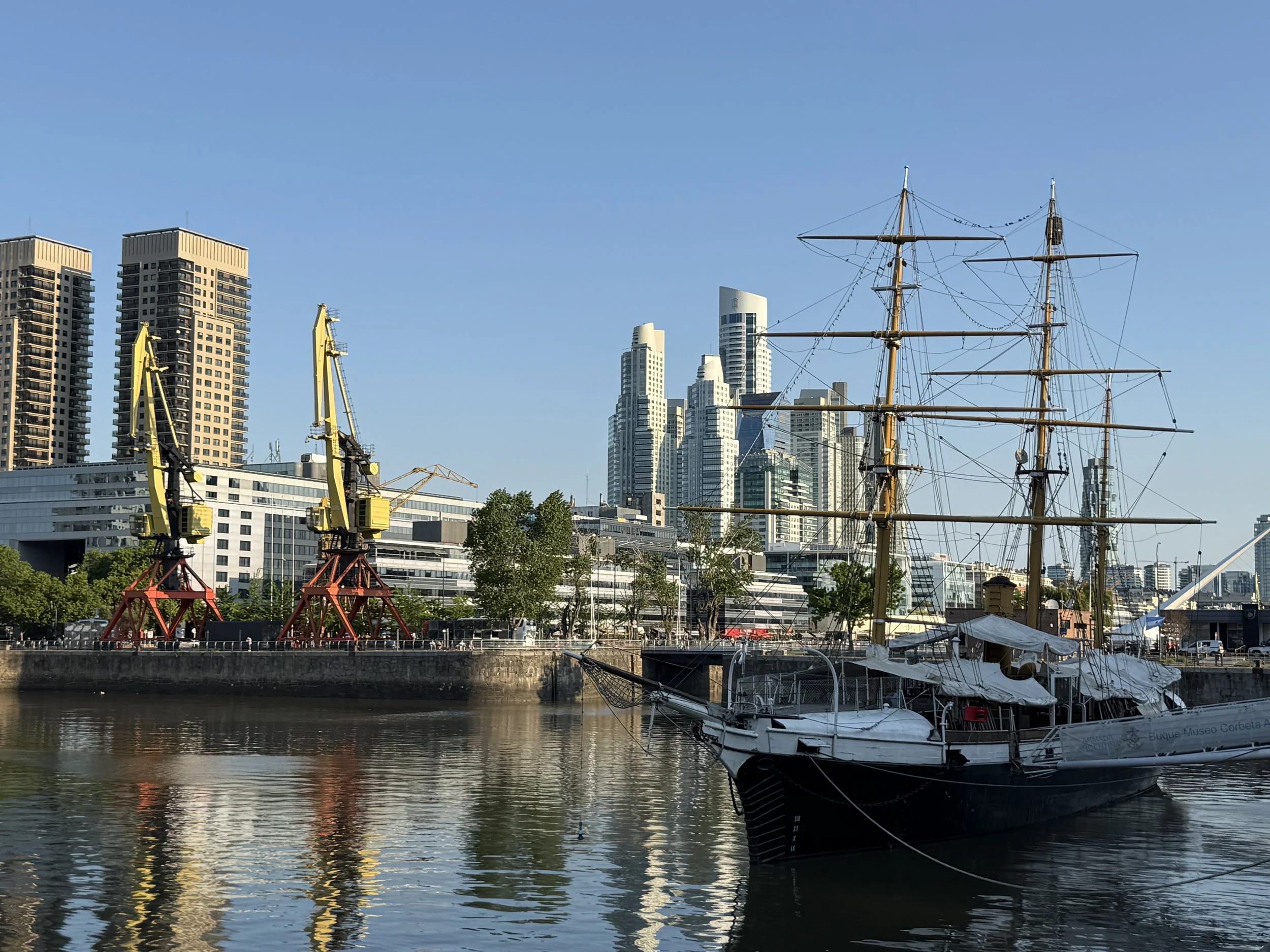
From there by Uber to finish a long day at Puerto Madero, a regenerated area of docklands similar to Canary Wharf, with a mixture of residential and commercial space, hotels and lots of bars and restaurants. We had an enjoyable saunter along the waterfront and an early dinner.
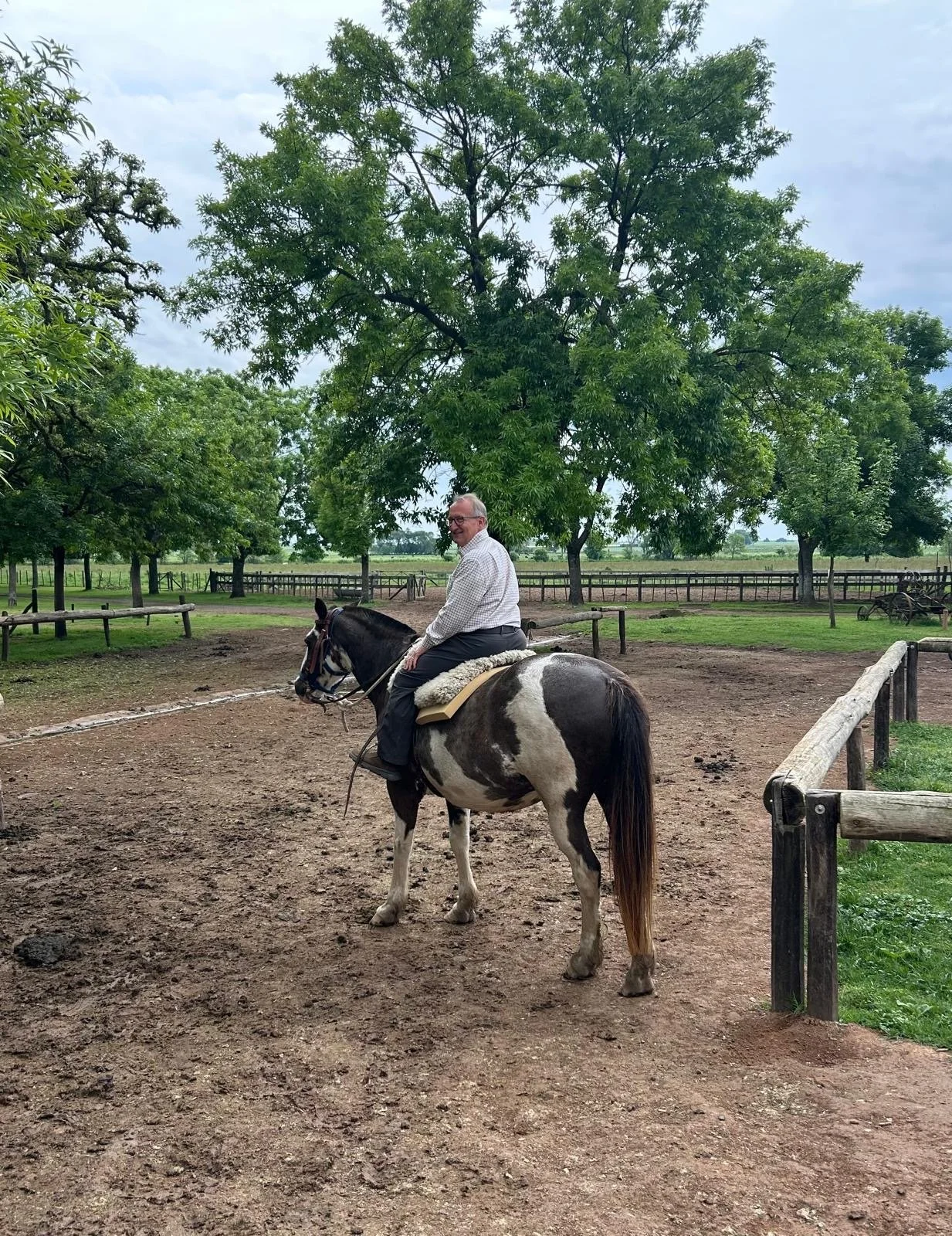
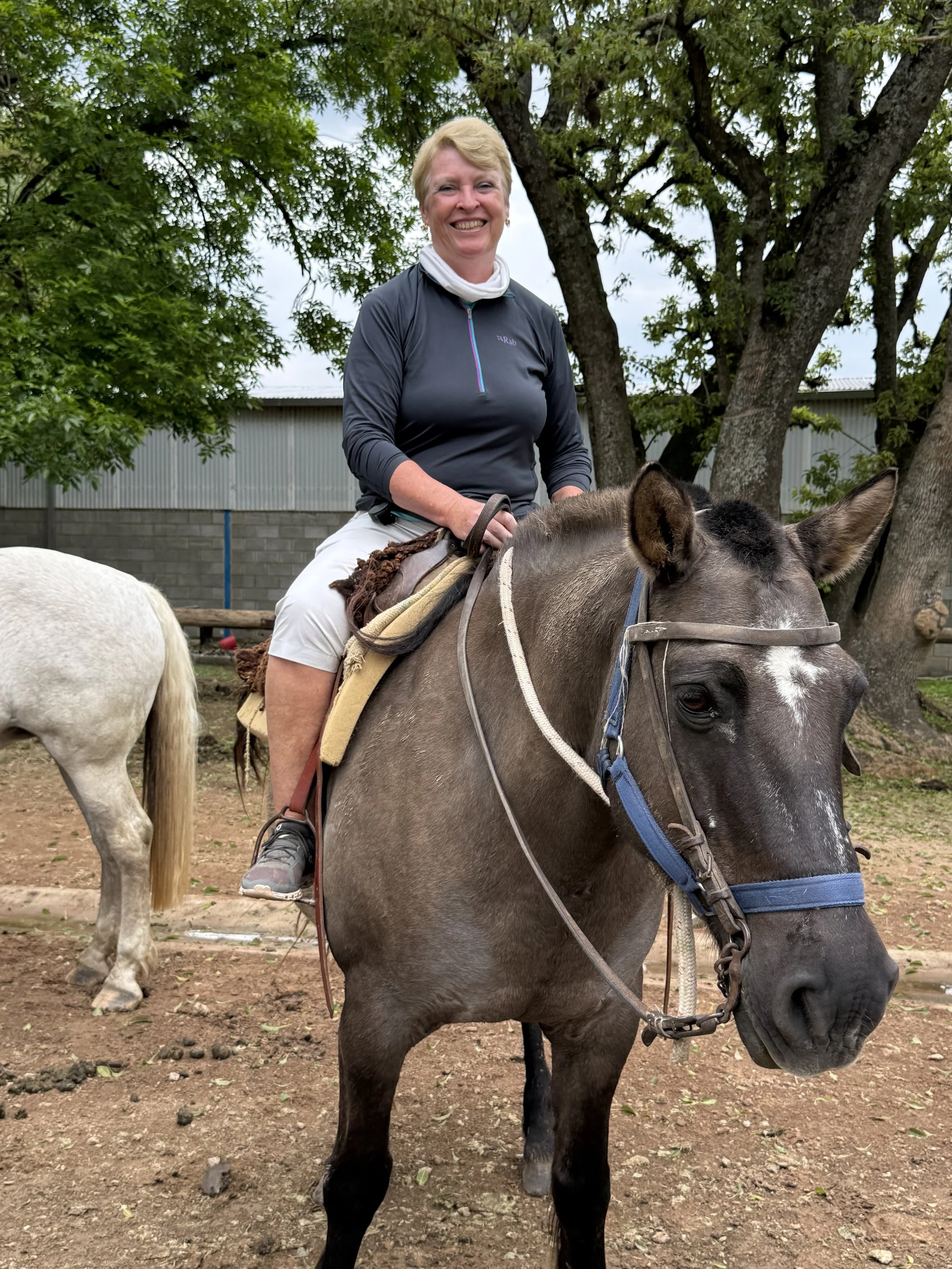
On our last day based in Buenos Aires, we had decided to take a tour out of the city to San Antonio de Areco and the Estancia El Ombú. San Antonia is the National Centre of Tradition, designated as such as the gateway to the pampas and a major centre for gaucho culture. Despite intermittent downpours, we enjoyed exploring the small town before heading to the estancia for some riding, lunch and some folk dancing.
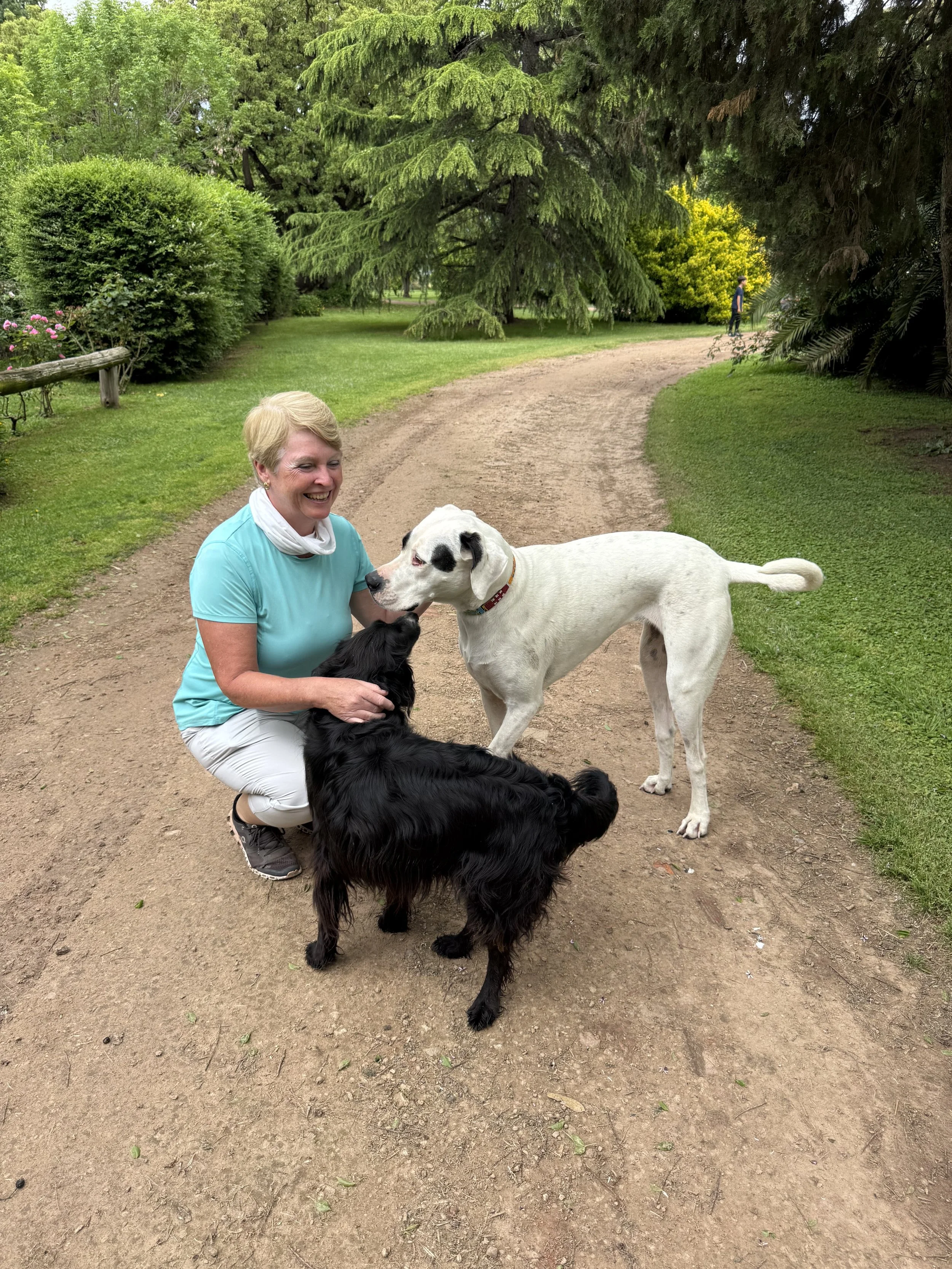
We enjoyed the riding. The horses were very well behaved and we just had to sit on them - they did the rest. Lots of dogs around the estancia - all very friendly, and some joined us for our horse ride.
Lunch was gargantuan, with more and more sausages and different cuts of beef and pork arriving in relays.
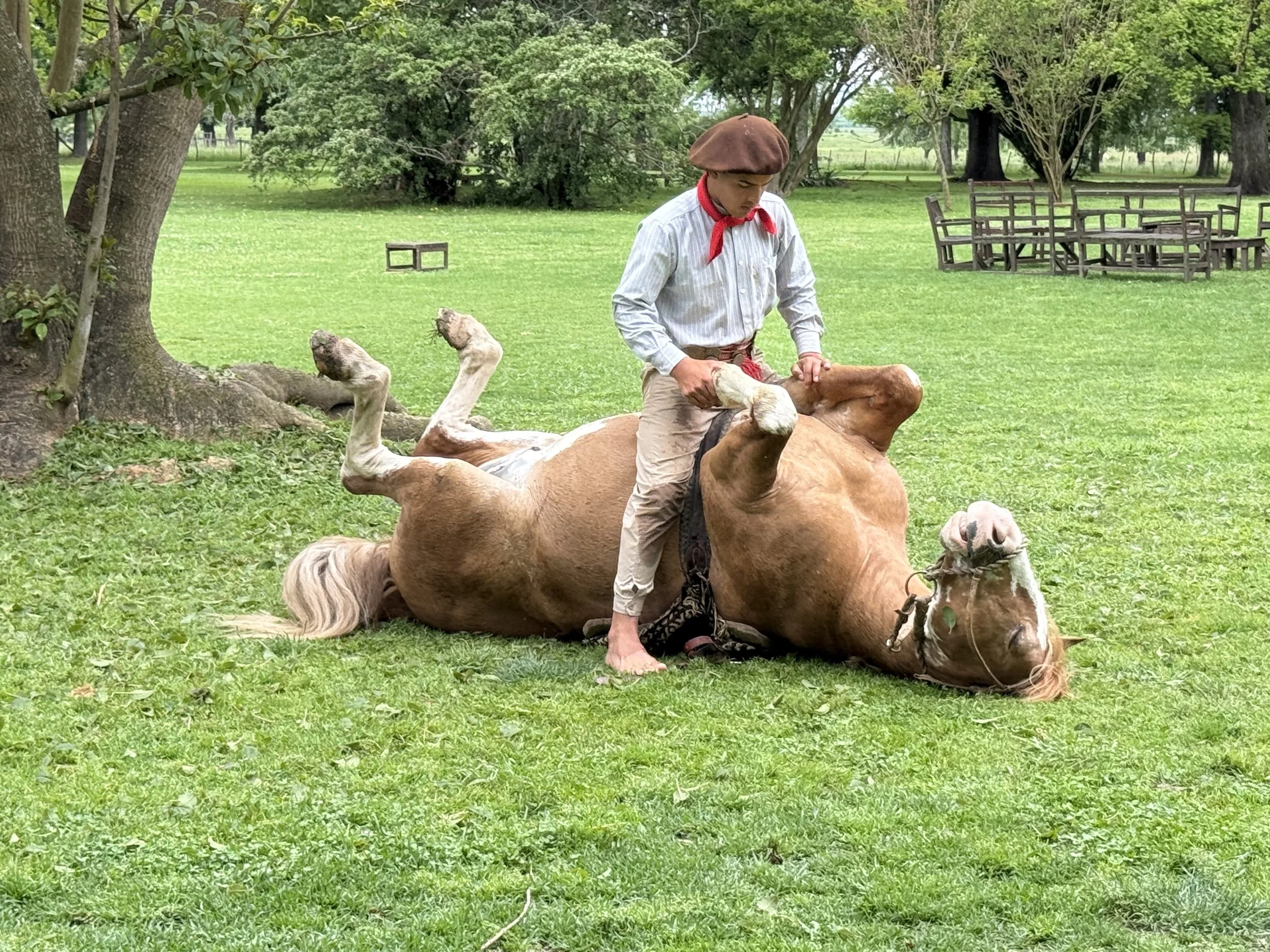
At the end of the afternoon, one of the gauchos did an interesting display of horse whispering with his horse. They plainly had an extraordinary bond - he was totally trusting of the horse and the horse totally trusted in him.
That’s the end of Argentina for us.
The people have been welcoming and very tolerant of our next-to-non-existent Spanish. Yes, there’s been the odd remark about Las Malvinas, Diego Maradona’s Hand of God and England’s recent defeat to Argentina in the World Cup, but it’s all been tongue-in-cheek. The Chileans came in for even more stick!
Outside the cities, our primary impressions have been of the vast amount of space. It’s the 8th largest country in the world but the population is only 45 million, and 15 million of them live in the Buenos Aires metropolitan area. There are more cows than people - some 54 million. The rest of the country is largely empty and most of it is pancake flat - the Andes excepted of course. Distances are vast and we heard today that most of the train network, which was quite extensive, was demolished in the 1990s after the government succumbed to pressure from truck drivers’ union. Unbelievable!
Anyway, on to Brazil tomorrow. Iguazu Falls and Rio de Janiero before we head home in a week’s time.